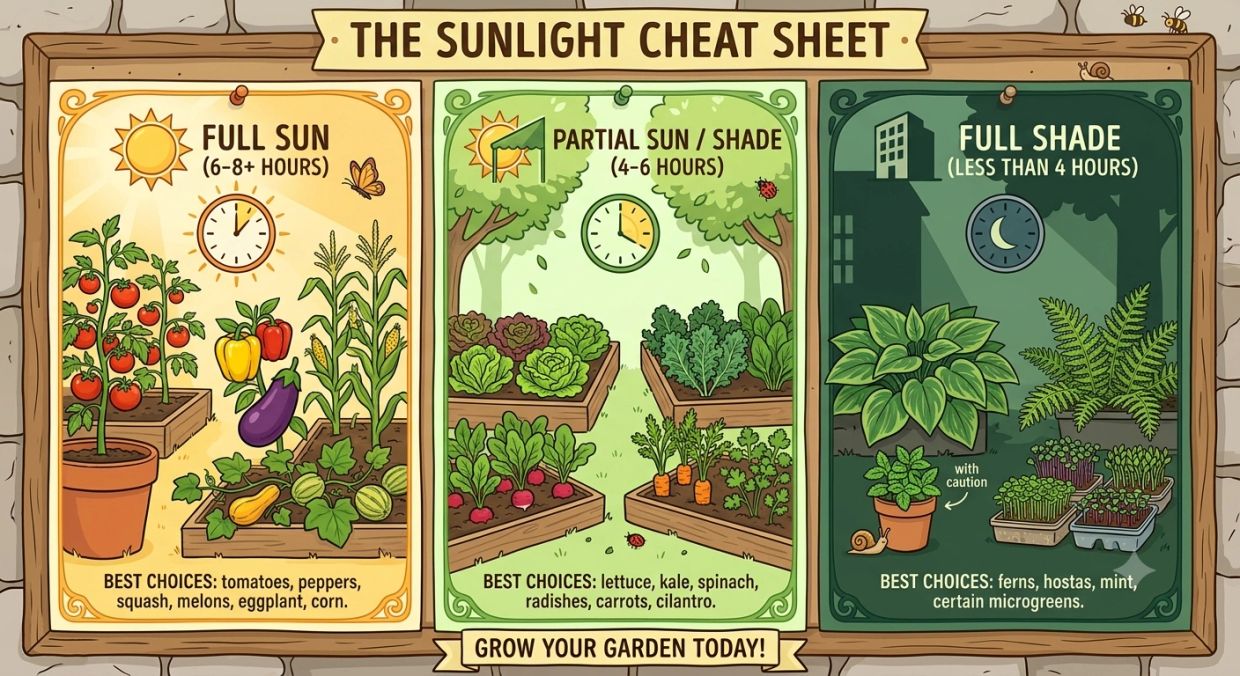
Track the Sun: The Golden Rule of Raised Beds and Container Gardening
Before you buy a single bag of soil or plant a single seed, you have to look up. Sunlight is the literal engine of your garden. Guessing how much light an area gets is the number one reason beginner gardens struggle. Here is how to map your space like a pro.
Why "Eye-Balling" It Doesn't Work
Human eyes are incredibly adaptive; a spot that looks bright to us at 2:00 PM might actually be trapped in deep shade for the other 22 hours of the day.
To heavy-fruiting plants like tomatoes, peppers, and cucumbers, a lack of direct sunlight means zero harvest. Conversely, cool-weather greens will quickly wither and bolt if cooked in intense afternoon rays.
How to Conduct a 1-Day Sun Audit
You don't need fancy equipment to map your yard or balcony. Just a piece of paper, a pen, and a smartphone timer.
- 1. Set an Hourly Alarm: Pick a sunny day. Starting at 8:00 AM, set an alarm to go off every two hours until 6:00 PM.
- 2. Check the Spots: Every time the alarm rings, walk outside and snap a photo of your intended growing zones, or sketch the shadows on paper.
- 3. Calculate the Tally: At the end of the day, count how many hours each specific spot spent bathed in direct, unshaded sunlight.
Advanced Strategies for Small Spaces
The North-to-South Axis
If you are building fixed raised beds, try to orient the long sides running from North to South. This layout ensures that as the sun moves across the sky, plants on both sides of the bed receive an equal amount of light, preventing taller plants from casting permanent shadows over their shorter neighbors.
Container Gardening Hack
The ultimate advantage of containers and fabric grow bags is their mobility. If your patio loses sun as the seasons shift from spring to summer, simply pick up your pots (or roll them on plant dollies) to chase the light!
Mind the Microclimates
Keep in mind that brick walls, concrete patios, and dark fences don't just block light—they store heat. A south-facing brick wall will radiate intense heat long after the sun goes down. This is perfect for tropical peppers or Mediterranean herbs, but a death sentence for delicate lettuces.
Quick Tips
- Audit sun hourly.
- Tomatoes need 6+ hours.
- Greens tolerate shade.
- Align beds North-South.
- Move pots for light.
- Brick walls radiate heat after sunset.
- Keep tall plants from shading neighbors.
- Use smartphone alarms to audit shadows.